

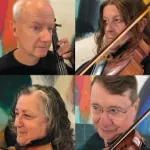
Quartet Camerata: Peter Bussereau and Anna Dryer-Beers (violins), Hannah Horton (viola) and Peter Randall (‘cello).
Before the first note had been sounded it was clear that this was going to be a lovely evening, and it wasn’t just the atmospheric lighting that made this so. The short verbal introductions by first violin Peter Bussereau were all beautifully judged, giving us either an insight into the music we were about to hear: why is it called the “Sunrise” quartet? – or a piece of background information that would ensure we’d prick up our ears and concentrate: the Dvořák “American” quartet took only 12 days to write and the folkish themes are not, in fact, actual quotations but are original.
In the three quartets chosen for the evening it was interesting to witness the development of the genre.
The Haydn quartet, dating from 1799, was dominated by the first violin, supported by the other players. The Dvořák, written virtually a century later, in 1893, used the instruments much more equally: passing the melody between them and generating varied and interesting textures. The slow movement had intense stillness whilst the finale included shifting rhythms that kept the ears entertained and the mind engaged.
The Ravel Quartet in F was composed only a few years later, in 1903, but was more adventurous still, incorporating pizzicato passages, lovely exploitation of the high and low registers of all the instruments and subtle use of the instrumental mutes in alternating short passages, which added to the calm of the Très Lent third movement. Peter had amusingly related the very critical comments that Ravel received when he submitted the first movement for the Prix de Rome – a competition he wished so much to win that he made five consecutive attempts at it, all unsuccessful.
The warm final applause drew the quartet back for an encore: a wicked arrangement of the Satie Gymnopedie No.1.
Clifton Hughes